


Erin’s Recipe Rundown
The recipe I’ve been waiting YEARS to share is finally ready!
In our family of 6, half of us eat gluten-free (2 of my kids and I). We all agree that REAL-DEAL, fried, yeast-raised donuts are one of the things we miss most!
I’ve tried for years to master gluten-free donuts and after many failed attempts could never get the texture just right. After doing a little research, I learned that Krispy Kreme uses potato starch in their donuts and decided to give it a try. I tried combining the potato starch with King Arthur Gluten-Free Bread Flour and it worked PERFECTLY!
I love this recipe so much I even used it as inspiration for these gluten-free apple fritters!
Why you’ll love it: This recipe makes gluten-free donuts that are so soft and pillowy you won’t believe they’re gluten-free! I love topping them with a simple vanilla glaze, but any glaze you like will work. For nostalgic mini donuts, I created this gluten-free mini powdered sugar donut recipe that is just like the ones from the gas station!
Top Tip: I recommend this easy, countertop deep fryer to make frying the donuts easier.
xoxo erin

Ingredients You’ll Need
Here are a few notes on some of the key ingredients to make these gluten-free yeasted donuts. Jump to the recipe card below for the exact measurements

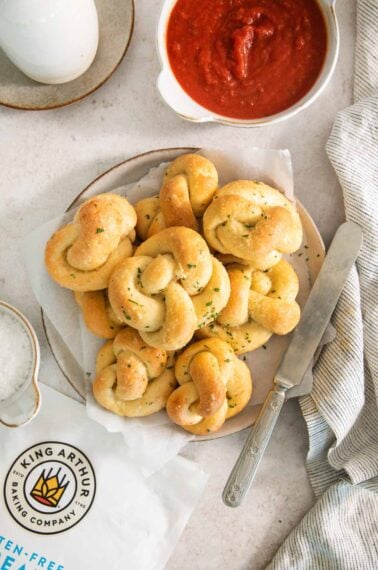
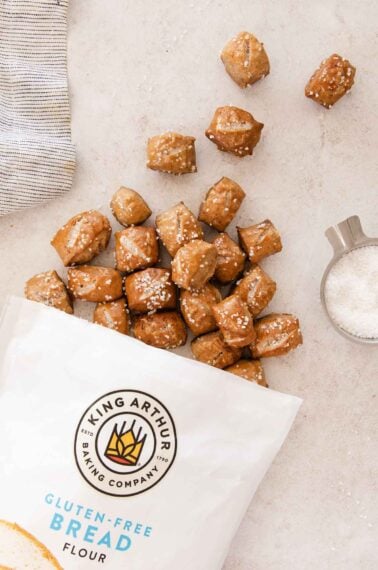
- Gluten-free bread flour: This is a must for this recipe! I highly recommend King Arthur Gluten-Free Bread Flour to get the perfect rise and texture. It’s one of my favorites for yeast bread recipes, including my family and reader-favorite gluten-free cinnamon rolls!
- Potato starch: Make sure you use potato starch not potato flour! It lightens the gluten-free bread flour and works with it to create the perfect structure.
- Milk powder: The whole milk powder adds flavor and helps the donuts bake up golden brown without adding extra unneeded liquid.
How to Make Gluten-Free Yeasted Donuts
Here’s an overview of how to make this recipe. You can jump to the recipe for the full instructions!

I highly recommend using a stand mixer with a paddle attachment for ease! Mix the dry ingredients, then slowly add the wet ingredients before kicking it up to medium speed. You want it to look like thick cookie dough!
Scrape the sides of the bowl, cover tightly with plastic wrap, then set aside to rise in a warm place. After that, chill the dough for exactly 20 minutes so that it’s easier to roll out.
Lightly flour a flat surface and roll out the dough to 1/2″ thick. I recommend using a donut cutter! Cut out donuts, then re-roll out the extra dough and repeat until it’s all used up.

To make frying less scary I use this fryer! It works well frying 2 donuts at a time. You can also fill a large heavy-bottomed pot with oil and place over medium heat until it reaches 335°F.
Prep your baking sheet with paper towels and a wire rack. This let’s them drain without making a big mess. Cook, flip, and cook until golden brown. Repeat with all donuts.
Once they’re cooled to just warm, dip them in the glaze and place them back on the wire rack so the excess can drip onto the paper towels in the pan below. Enjoy!

More Gluten-Free Bread Flour Recipes

Gluten-Free Donut Recipe (Fried & Fluffy Yeast-Raised!)
Video
Ingredients
Donut Dough
- 2½ cups (375g) King Arthur Gluten-Free Bread Flour
- 1 cup (196g) potato starch
- ¼ cup (50g) granulated sugar
- ¼ cup (32g) dry whole milk powder
- 2¼ teaspoons instant yeast
- 2 teaspoons baking powder
- 1 teaspoon kosher salt
- 1¼ cups (240ml) water, warm
- 4 tablespoons (56g) butter, melted
- 2 large eggs
Vanilla Glaze
- 3 cups (360g) powdered sugar
- ½ cup milk of choice
- 2 teaspoons vanilla extract
Instructions
- In the bowl of a stand mixer fitted with the paddle attachment, add the gluten-free bread flour, potato starch, granulated sugar, milk powder, instant yeast, baking powder and salt. Mix to combine.
- With the mixer running on low, slowly add the water, melted butter and eggs. Increase the speed to medium and mix for 3 minutes. The dough will resemble thick cookie dough, this is normal.
- Using an oiled rubber spatula, scrape down the bottom and sides of the bowl. Cover the bowl tightly with plastic wrap and let rise in a warm place for 45-60 minutes.
- After the dough has risen, refrigerate it for 20 minutes. (Refrigerating the dough makes it easier to roll out.)
- Turn out the dough onto a lightly floured surface and. Sprinkle with a little gluten-free flour, then roll the dough out until it is ½-inch thick.
- Using a donut cutter, cut out the donuts. Re-roll the dough and cut more donuts as needed.
- Fill a large heavy-bottomed pot with oil, about 3-4 inches deep. Place over medium heat until a deep-fry thermometer registers 335°F.
- Line a large baking sheet with paper towels. Place a wire rack on top.
- When the oil is ready, drop a few donuts into the hot oil, being careful to not overcrowd. Cook for 2 minutes, then turn over and cook for an additional 2 minutes or until they are golden brown.
- Remove the donuts from the oil and let them drain on the prepared baking sheet. Repeat with the remaining donuts.
For the vanilla glaze:
- In a small bowl, combine the powdered sugar, milk and vanilla. The glaze should be fluid but not runny. It should coat the back of a spoon and drizzle in a slow, steady stream when lifted. Add a few tablespoons of milk if needed to reach the desired consistency.
- Let the donuts cool until just warm to the touch before dipping fully in the glaze. Place the glazed donuts on the wire rack so the excess glaze can drip on the sheet pan below.










Hi Erin! I have a question I followed the recipe exactly and my donuts looked beautiful but they are quite dense and not airy pillowy soft donuts like I was hoping for. Do you have an idea of what went wrong? I allowed a little over an hour to rise I live in a humid climate but I’m wondering if the dough needed to rise longer? Thank you!
Hi Marielle! We’re sorry you had this experience. Did you use the King Arthur GF Bread Flour and potato starch? This recipe won’t work with other flour blends or potato flour. If using those two ingredients, then it could be a matter of rise or oil temperature when frying. Did the dough look noticeably puffy after rising?