


Erin’s Recipe Rundown
Texture: Crisp edges and soft, chewy centers.
Taste: Nutty brown butter, warm spices, and classic oat with a hint of molasses.
Ease: The hardest part is browning the butter, but it’s well worth the effort. Other than that is is an easy, classic cookie recipe!
Top Tips: Pulse the oats just to the point that you have a variety of textures. You want both chopped oats and oat flour.
Recommended GF Flour: I like to use King Arthur Flour Gluten-Free Measure-for-Measure Flour for this recipe. It’s a high-quality gluten-free blend that contains xanthan gum.
Would I make these again? Yes! These are one of my all-time favorite cookies. The chewy brown butter cookies with oats and sweet glaze is just next level delicious!
xoxo erin

I set out to create a gluten-free version of the timeless iced oatmeal cookies we all know and love. These gluten-free iced oatmeal cookies I dare say are even BETTER than the original!
These cookies have the nutty flavor of brown butter with perfect golden edges, soft centers, and a crisp topping of vanilla icing!
Whether for dessert at home, a holiday treat platter, or to share at cookie exchanges, this recipe is a confirmed crowd-pleaser!
Featured Comment
From Alexandra: “These are absolutely incredible! My husband, who is not gluten free, said they’re his new favorite Christmas cookies. This is a must-try recipe!”
Table of Contents
- Erin’s Recipe Rundown
- Ingredients You’ll Need
- Gluten-Free Oats
- How to Make Gluten-Free Iced Oatmeal Cookies
- Make-Ahead/Storage/Freezing Instructions
- Can these gluten-free iced oatmeal cookies be made dairy-free?
- Can I skip the icing on these cookies?
- Can I use quick oats instead of rolled oats?
- More Gluten-Free Christmas Cookies
- Gluten-Free Iced Oatmeal Cookies Recipe
Ingredients You’ll Need
Here are a few notes on some of the key ingredients to make these gluten-free iced oatmeal cookies. See the recipe card below for exact measurements.

- Gluten-free flour: I recommend using a high-quality gluten-free measure-for-measure flour that contains xanthan gum as a binder to ensure the right texture. This is my favorite brand.
- Spices: Cinnamon and nutmeg add warmth and extra flavor to the cookies. They complement the oats for that classic oatmeal cookie taste!
- Gluten-free rolled oats: Be sure to use certified gluten-free oats! I recommend rolled oats for these cookies, rather than quick oats, to get the best texture.
- Brown/granulated sugar: Both sugars add sweetness. The brown sugar adds moisture and helps achieve the chewy centers. The granulated sugar helps create the crisp edges for the perfect blend of textures.
- Butter: Browning the butter is important for the overall taste and texture. It’s a key step in many of my cookie recipes! For dairy-free, you can use vegan butter, but keep in mind most vegan butters won’t brown.
- Molasses: The molasses adds depth of flavor to the overall sweetness and adds rich flavor that pairs well with the warm spices.

- Powdered sugar: The classic cookie uses a powdered sugar glaze that firms up for that smooth, yet crisp layer of icing.
- Milk/vanilla: These two ingredients add the needed liquid for the powdered sugar icing. The goal is to make this icing very, very thick so it covers the cookies evenly and sets. For dairy-free, use a dairy-free milk of your choice.
Gluten-Free Oats
- Oats are naturally gluten-free, but they’re often harvested, processed and handled alongside wheat. Look for oats that are specifically labeled gluten-free. For more information, check out this article that answers the question: Are oats gluten-free?
- I like to use a food processor to break the gluten-free rolled oats down a bit. Pulsing them 10-12 times will create a good mixture of chopped oats and oat flour. This is important for the overall texture and chew of the cookies!
- Here is what you’re looking for when you pulse the oats in the food processor:

How to Make Gluten-Free Iced Oatmeal Cookies
Here’s an overview of how to make this recipe. You can jump to the recipe for the full instructions!

- In a medium bowl: Whisk together the gluten-free flour, baking soda, cinnamon, nutmeg, and salt, then set the bowl aside.
- In a food processor: Pulse the rolled oats 10-12 times until you get a good mix of textures.

- In a medium skillet: Melt the butter over medium-low heat, stirring occasionally. Continue to cook the melted butter Once it starts to foam, stir constantly so the milk solids don’t stick to the skillet. You’ll see it change from yellow to golden brown and it will create a nutty aroma. Remove it from the heat and pour it into a medium bowl right away.
- Add sugar: Whisk both the brown sugar and granulated sugar into the brown butter.

- Add ingredients: Whisk in the eggs, vanilla, and molasses. You want it to become smooth and creamy. I then like to use a rubber spatula to mix the dry ingredients into the wet mixture until well-combined.
- Prepare the dough: Stir in the oats, then scoop the dough into balls (about 2 tablespoons). Place the dough balls onto a large plate or lined baking sheet, then cover tightly with plastic wrap and chill for at least 2 hours. You can chill the dough for up to 3 days, but you’ll want to move it to an airtight container if chilling longer than a few hours.

- On a lined baking sheet: Bake cookies at 350°F until the edges are golden brown and the centers are set (about 10-12 minutes). Cool on the baking sheet for 5 minutes, then move them to a wire rack to cool completely.
- In a medium bowl: Sift the powdered sugar, then add the vanilla and 1 tablespoon of milk. I typically just use a fork to mix it together. The icing should be very, very thick and hard to mix. If it’s too thin, add more powdered sugar. Lightly dip the tops of the cooled cookies into the icing, then let them sit at room temperature for a few hours to fully set.
Make-Ahead/Storage/Freezing Instructions
To Make-Ahead: This is a great make-ahead recipe! You can refrigerate the dough balls for up to 3 days (covered tightly). Or freeze the dough balls to prep further in advance!
To Store: Store cookies in an airtight container at room temperature for up to 5 days.
To Freeze (dough): Freeze the dough balls on a lined baking sheet for 1-2 hours until they’re set, then transfer to an airtight container or freezer bag. Freeze for up to 3 months. Bake them from frozen at 350°F. Add 1-2 minutes to the recipe’s baking time for frozen dough.
To Freeze (baked): Let them cool completely, then store in airtight container with parchment or wax paper separating the layers. Freeze for up to 3 months. Thaw at room temperature for 1-2 hours.

Can these gluten-free iced oatmeal cookies be made dairy-free?
Yes! Use vegan butter and dairy-free milk to make these cookies dairy-free. Keep in mind that most vegan butters won’t brown so you can skip that step when using vegan butter unless you’ve opted for a brand that can brown.
Can I skip the icing on these cookies?
Absolutely! The icing adds a bonus layer of sweet vanilla flavor and crispness, but it is totally optional. The oatmeal cookies are delicious on their own too!
Can I use quick oats instead of rolled oats?
Using quick oats will change the texture. I recommend the rolled oats to get that satisfyingly chewy texture. If needing gluten-free, always verify that you are using certified gluten-free oats! Check out this article answering are oats gluten-free?


Gluten-Free Iced Oatmeal Cookies
Ingredients
Dry Ingredients
- 2 cups (300g) gluten-free measure-for-measure flour
- 1½ teaspoons baking soda
- 1½ teaspoons ground cinnamon
- ¼ teaspoon ground nutmeg
- ½ teaspoon kosher salt
Other
- 1¾ cup (150g) gluten-free rolled oats
- 1 cup (227g) butter
- 1 cup (213g) brown sugar
- ¾ cup (150g) granulated sugar
- 2 large eggs room temperature
- 2 teaspoons vanilla extract
- 2 tablespoons molasses
Icing
- 1½ cups (180g) powdered sugar
- ¼ teaspoon vanilla extract
- 1½-2 tablespoons milk of choice
Instructions
- In a medium bowl, whisk together the gluten-free flour, baking soda, cinnamon, nutmeg and salt. Set aside.
- Pulse the oats in a food processor 10-12 times until you have a variety of texture—chopped oats with some oat flour. See photo above for a visual.
- Melt the butter in a medium skillet over medium-low heat, stirring occasionally.
- Once the butter is melted and begins to foam, stir continuously to prevent the milk solids from sticking to the skillet. The butter will change from yellow to golden brown quickly and will have a nutty aroma. Remove from the heat and immediately pour into a medium bowl.
- Add the brown sugar and granulated sugar to the brown butter. Whisk to combine.
- Whisk in the eggs, vanilla and molasses until smooth and creamy.
- Using a rubber spatula, mix in the dry ingredients until well-combined. Stir in the oat mixture.
- Scoop the cookie dough into round balls, about 2 tablespoons per ball. Place dough balls onto a large plate or lined baking sheet. Cover tightly with plastic wrap.
- Chill the dough balls for at least 2 hours or up to 3 days. (Transfer to an airtight container if storing more than a few hours.)
- Preheat the oven to 350°F. Line large baking sheets with parchment paper or silicone baking mats.
- Bake for 10-12 minutes or until the edges are golden brown and the center is set.
- Remove from the oven and cool on the baking sheet for 5 minutes. Transfer to a wire rack to cool completely.
- Sift the powdered sugar into a medium bowl. Add the vanilla extract and 1 tablespoon of milk and use a fork to mix together. The icing should be very, very thick and hard to mix together. If it’s too thin, add more powdered sugar.
- Lightly dip the tops of the cooled cookies into the icing. Let the icing sit at room temperature for a few hours to set.









I made these for a Christmas party and they were a hit! Even all our gluten friends liked them the best and had no idea they were gluten free.
Hi Jessica, that’s wonderful and the ultimate compliment! Thanks so much for the review!
Hey! I made these a few months ago, and they were delicious! They came out perfect! Husband approved! But I made them for Christmas and this time the center was not setting and they were getting super crispy and thin on the edges. Do you know what I can do in the future to avoid this from happening again?
Hi Sarah, good question! Glad you’ve had success with them in the past! It sounds like the most recent time they needed to be baked at a lower temperature for longer. It can really depend on the humidity, altitude, environment, etc! Hope this helps!
These are absolutely amazing cookies! They taste like oatmeal cream pies. I think I’m going to skip the icing. I made them exactly like the recipe and they turned out gorgeous! I had to bake them a little longer but I think I may have packed my cookie scoop a little too full, so that is 100% my fault. Thank you for this amazingly delicious recipe!
Hi Sarah, agreed that the icing is just a nice bonus, but not necessary! So glad you enjoyed them and thanks for the review!
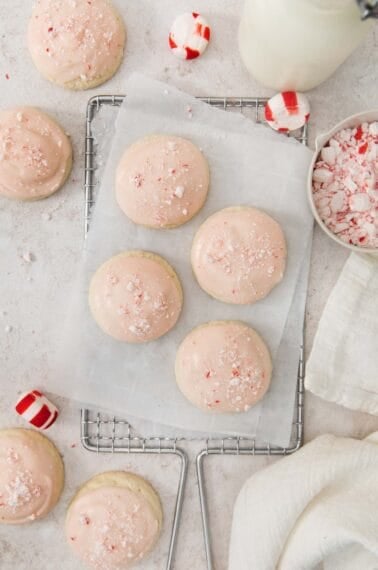
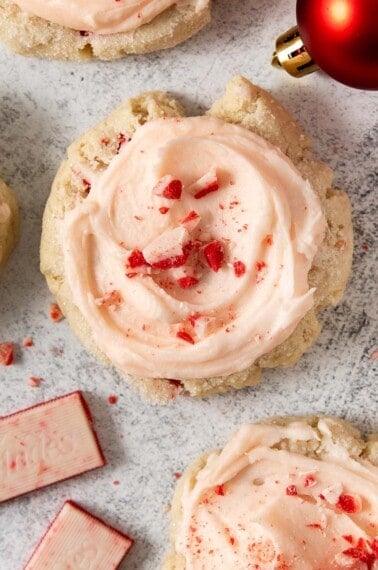
Cookies are delicious however they were not flat like the picture, should I have flattened them??
Hi Celly, if you want a thinner, flatter cookie like the photo you may need to press the dough balls down with your palm before baking, or let them come to room temperature after chilling.
If I am using Bob’s Red Mill measure to measure flour do I need to add anything?
Hi Katie, no, you don’t need to add anything, this recipe was developed with measure-for-measure flour!
I was wondering, could it be possible to substitute the molasses in this recipe for something like honey? Or maybe leave it out? I know it’s probably gonna change the flavor but I can’t find molasses where I currently live.
Hi there, good question! We haven’t tried a substitution for molasses on this recipe. Honey will probably work to maintain the texture, but will give the cookies a slightly different/lighter flavor. We don’t recommend skipping it completely, since it’s important for the texture and sweetness.
Wow these are amazing! A nice big, fat cookie that is soft and chewy in the middle. Definitely have a gingerbread taste to them, which I love. I’m not even the gluten free one in the household and I may eat them all!
Do you have a recommendation for an egg substitute?
Hi Wendy, yes! You can use a flax or chia egg, using 1 tablespoon of flax/chia and 3 tablespoons of water per egg. Let it sit about 5-10 minutes before using. You can also try substituting with 1/4 cup applesauce or mashed banana, but this will give a bit softer/cakier texture.
This recipe looks delicious. If I wanted to make them a bit more like gingerbread, can’t I add ground ginger and maybe a little molasses. Would I have to add more gf flour or oats if I did that. Thanks.
Wow these are amazing! A nice big, fat cookie that is soft and chewy in the middle. Definitely have a gingerbread taste to them, which I love. I’m not even the gluten free one in the household and I may eat them all!
These have become a stable around the holidays for my family and my go to for Christmas potlucks they are so yummy and addictive!!
Hi Nikki, thanks for the wonderful review! So glad you’ve been enjoying them!
Hey Erin,
Do you have a brand of molasses you trust? My son has Celiac as well, so I prefer products that are certified. I looked on the jar and don’t see any allergy warnings, nor do I see any GF labels. I wondered if you had a go-to brand for that reason. Thanks!
Hi Nicole, Grandma’s brand is one option. The company states their molasses is gluten-free. We’d also recommend sticking with unsulphured molasses as it is better for baking than blackstrap. Molasses is naturally gluten-free, it would just be a matter of cross-contamination in manufacturing. We hope this helps and you enjoy the cookies!
Absolutely love your recipes. Do you use blackstrap or fancy mollases? I prefer blackstrap for more flavour but I want to achieve the best result. Thankyou!
Thank you, Adeline! We’re so pleased you’re loving the recipes! We just use regular molasses for these cookies (sometimes called original, milk, or unsulfured). We wouldn’t recommend blackstrap molasses for this recipe as it can overpower the flavor and make it too bitter. We hope this helps!
Hello (and love your recipes)! I might be wrong, but I think 1 c of Measure for Measure flour is 120g, so 2c would be 240g. Were you meaning 2 1/2 c perhaps?
Thanks for all you do for us!
Hi Gretchen, the measurements in the recipe are correct despite King Arthur’s label! We find that 1 cup of KAF weighs much closer to 150 grams. At the end of the day a cup measurement is subjective – and we think the manufacturer doesn’t realize gluten-free flour is denser than traditional wheat flour (traditional wheat flour is 120 grams/cup) so they provide that generalized measurement that really isn’t accurate for gf flour. Her measurement for the KAF flour is consistent across all of her recipes, even though it’s not the same as KAF. We hope you enjoy the cookies!