


Erin’s Recipe Rundown
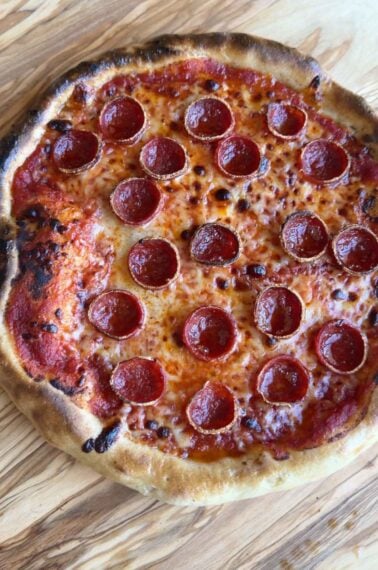
Texture: Chewy, crisp on the bottom and light. This crust has a great chew to it which is often hard to come by with gluten-free pizza!
Taste: Flavorful and golden thanks to olive oil a little almond flour.
Ease: So easy to make! You can have pizza on your table in less than 90 minutes. Great beginners recipe.
Top Tips: I like to parbake the pizza crust without toppings, then slide it onto a pizza steel to finish baking with the toppings. This ensures a crispy bottom crust!
Recommended GF Flour: Works great with many gluten-free flour blends. Use a high-quality flour that contains xanthan gum. I like King Arthur Flour and Bob’s Red Mill.
Would I make these again? Absolutely! This is our go-to homemade gluten-free pizza crust. I’ll usually pair it with a lighter side, like our favorite cucumber tomato salad or this honey lime fruit salad.
xoxo erin

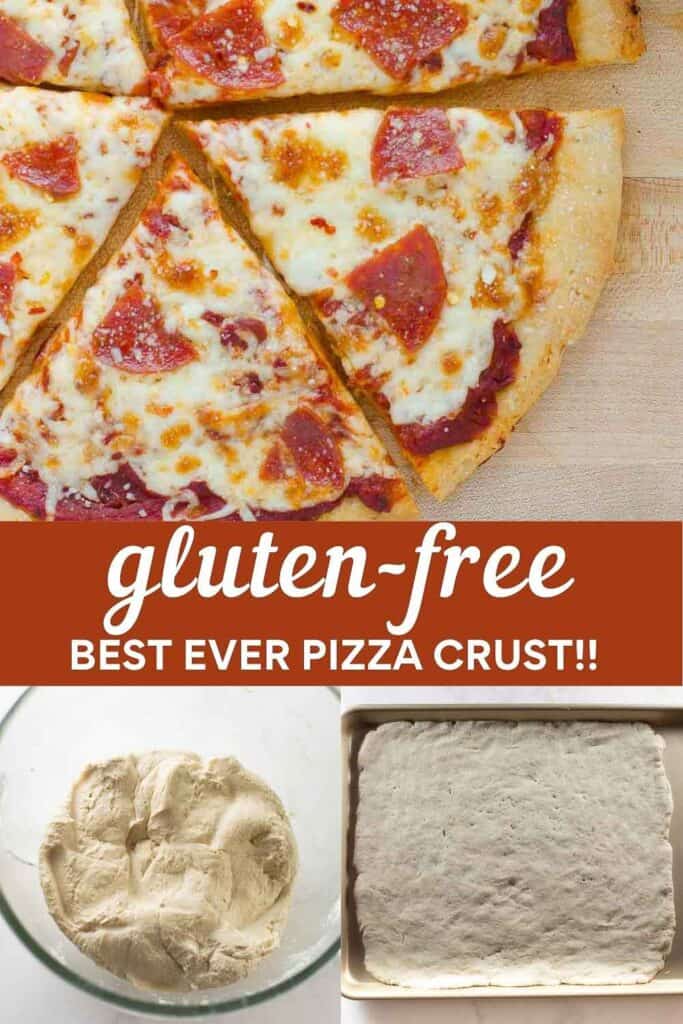
I’ve tried a lot of gluten-free pizza crust recipes over the years and this is my favorite. It’s easy to make and makes a crust that is both crispy and chewy.
So many gluten-free pizza crusts are thin crusts that turn out crunchy like a cracker. If you’re wanting a gluten-free crust with a good chew, this is it!
Featured Comment
From Diane: My 7 year old granddaughter has coeliac disease and l have tried numerous gf pizza base recipes for her with no luck. She absolutely loves this one, we double the recipe every time so she always has one in the freezer. Her little brothers also love it. Thank you for a wonderful recipe!
Ingredients You’ll Need

Here are a few notes on some of the key ingredients to make this gluten-free pizza crust. See the recipe card below for the measurements.
- Gluten-Free 1:1 Baking Flour: I like to use a high quality gluten-free measure-for-measure flour blend like King Arthur Flour in my baked goods. This blend has a mixture of brown rice flour, white rice flour, potato starch and tapioca starch. This recipe works well with most types of gluten-free all purpose flour!
- Almond Flour: Adding a little almond flour is one of my favorite tricks in gluten-free baking. The extra protein/fat in the almond flour this pizza crust gives it great flavor and helps it brown up nice and golden. To make this gluten-free pizza crust nut-free, you can simple replace the almond flour with more gluten-free flour.
- Psyllium Husk Powder: Don’t skip this ingredient! It had elastic properties that give the crust a springy, bready consistency. I’ve tried many brands of psyllium husk powder over the years and highly recommend this one.
- Baking Powder: This is an unusual ingredient in pizza crust but it lightens up the dough.
- Instant Yeast: Saf yeast is my favorite brand for all of my gluten-free yeast breads. Gluten-free doughs don’t need an extra rise, so instant yeast works great!
How to Make Gluten-Free Pizza Crust
Here’s an overview of how to make gluten-free pizza crust. You can jump to the recipe for the full instructions.
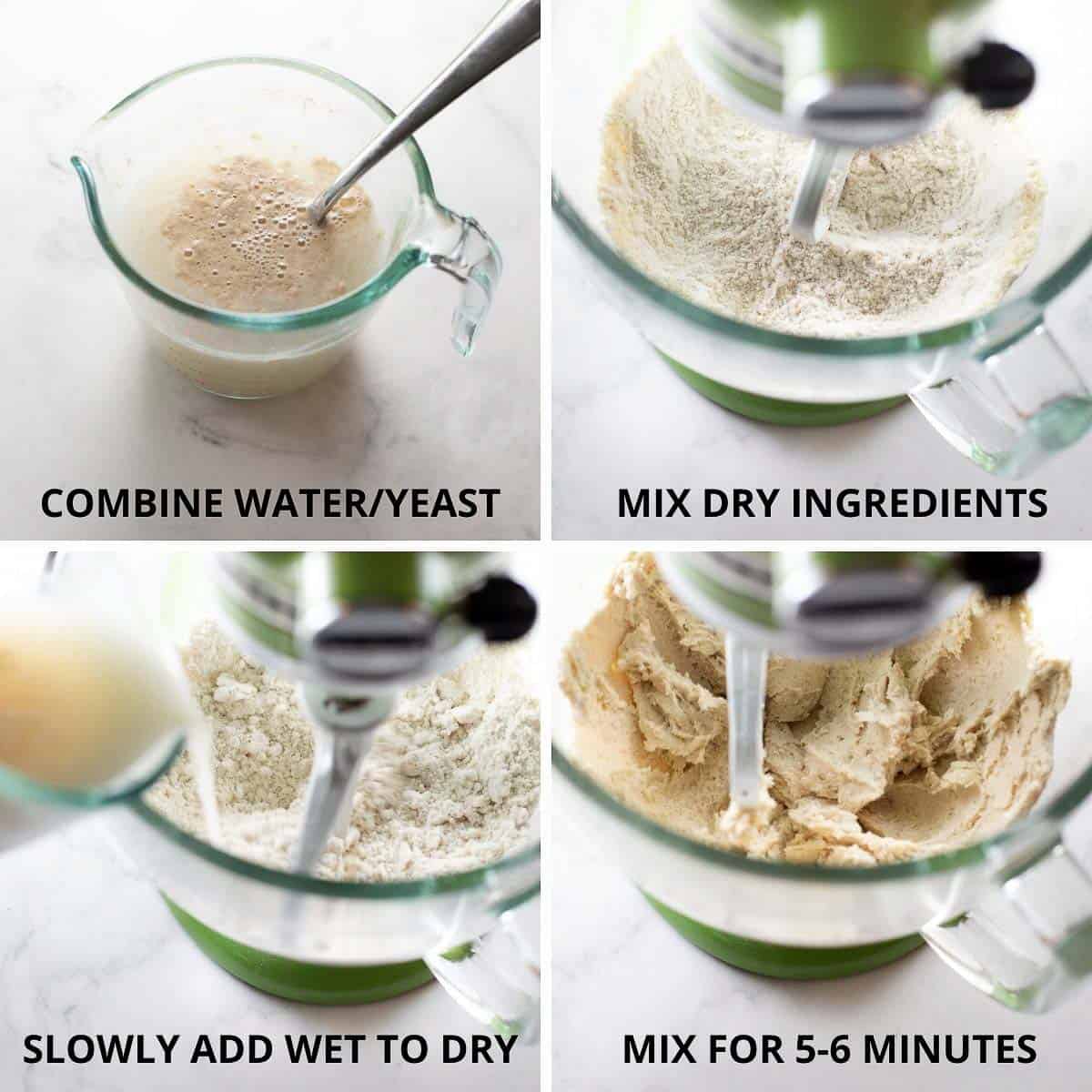
- Yeast: I like to use instant yeast for this gluten-free pizza crust. You’ll mix it together with some sugar and water and let it sit until it’s nice and bubbly.
- Dry Ingredients: I think this dough comes together best in a stand mixer fitted with a paddle attachment. Add all the dry ingredients to the bowl of the mixer and mix to combine.
- Wet Ingredients: With the mixer running on low, slowly pour in the yeast mixture followed by the olive oil. Then mix on medium-high speed for about 5 minutes.
Gluten-Free Pizza Dough Consistency
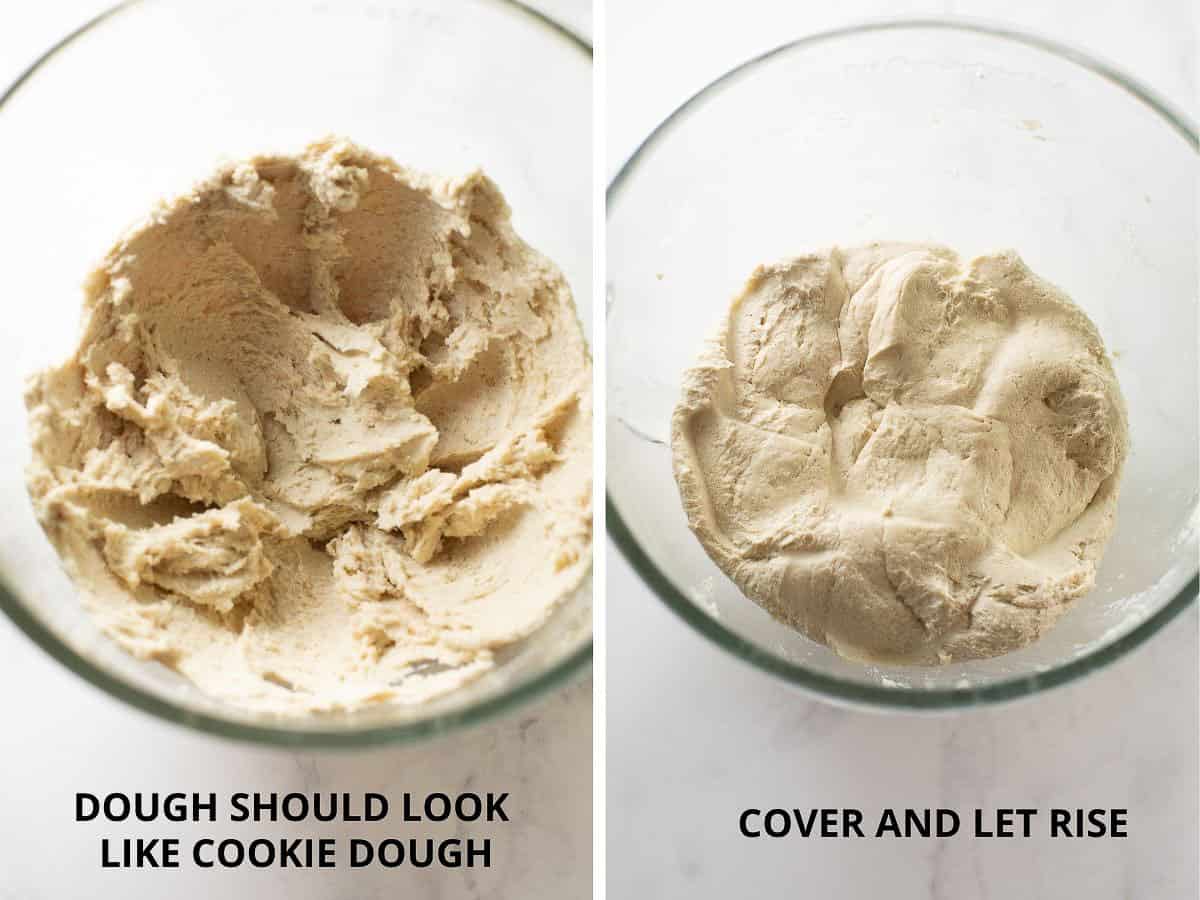
Your dough might be more runny depending on what gluten-free flour blend you use. All gluten-free flour blends are slightly different and even how you measure the flour can cause differences. See the video in the recipe card below to get a visual on the texture you’re going for.
The dough should be more like cookie dough than runny batter. I would suggest mixing the dough for 3-4 minutes first, then adding more flour if needed (just a little at a time!) to thicken it up slightly.

- Press the dough onto the pizza pan and let rise for 10 minutes.
- I like to parbake the crust before adding the toppings for best results. If you have a pizza stone or steel – even better. I usually slide my pizza off the parchment/pan and bake it directly on the pizza steel for the second bake with the toppings.
Tips for the Best Gluten-Free Pizza
- One thing I’ve noticed at a lot of restaurants that serve gluten-free pizza is that the pizza never gets crispy on the bottom. Gluten-free things generally need to be baked longer than regular baked goods.
- I par-bake the pizza on these pans that I line with parchment paper rounds for 15-20 minute before adding the toppings. Then I like to slide the pizza onto a pizza steel and bake it for another 10-15 minute with the toppings on for perfectly crispy, chewy pizza!
- Another great thing about this crust recipe is that it works with basically any gluten-free flour blend. It turns out wonderfully with King Arthur Flour and Bob’s Red Mill gluten-free flours. You can use what you have on hand.

More Gluten-Free Yeast Bread Recipes

Gluten-Free Pizza Crust (5-Star Recipe!)
Video
Ingredients
Yeast Mixture:
- 1 cup (240ml) warm water about 110°F
- 1 tablespoon granulated sugar
- 1 1/2 teaspoons instant yeast
Other Ingredients:
- 1 1/2 cups (225g) gluten-free measure-for-measure flour
- 1/4 cup (25g) almond flour
- 1 tablespoon psyllium husk powder
- 1 teaspoon baking powder
- 3/4 teaspoon kosher salt
- 2 tablespoons olive oil
Instructions
- In a measuring cup, combine the warm water, sugar and yeast in a glass measuring cup. Whisk to combine. Let proof for 5-10 minutes.
- In the bowl of a stand mixer fitted with the paddle attachment, add the gluten-free flour, almond flour, psyllium husk powder, baking powder and salt.
- With the mixer running on low, add the yeast mixture along with the olive oil. Increase the speed to medium-high and mix for 5 minutes. The dough will resemble thick cookie dough, this is normal.
- Using an oiled rubber spatula, scrape down the bottom and sides of the bowl and mix again until well-combined.
- Scoop the dough into the prepared pan and smooth the top with wet hands. Cover with oiled plastic wrap and let rise in a warm place for 45-60 minutes.
- Place a pizza steel or pizza stone in the oven. Preheat the oven to 425°F. Line a 12-inch round pizza pan with a circle of parchment paper. Spray the parchment paper with cooking spray.
- Using oiled or wet hands, press the dough into the pan. The dough will shrink slightly as it bakes, so press the dough as thin as you can to cover the pan. Let rise for another 10 minutes.
- Bake the crust without toppings for 15-20 minutes. Remove from the oven and add your desired toppings.
- Slide the pizza off the parchment paper and pan directly onto the pizza steel. Bake for another 10-15 minutes until the toppings are bubbly and cooked to your liking.
- Remove from the oven and let cool for 5 minutes before slicing.
Notes
- One thing I’ve noticed at a lot of restaurants that serve gluten-free pizza is that the pizza never gets crispy on the bottom. Gluten-free things generally need to be baked longer than regular baked goods.
- With this recipe I parbake the crust for 15-20 minute before adding the toppings. Then bake it for another 10-15 minute with the toppings on and you’ll have perfectly crispy, chewy pizza!
- I bake on a pizza pan, then transfer it to a wooden cutting board to slice up. Any cookie sheet will work but I recommend greasing the sheet with shortening (not olive oil) so it doesn’t stick. You can also use parchment paper if you prefer.
- Another great thing about this crust recipe is that it works with basically any gluten-free flour blend. It turns out wonderfully with King Arthur Flour and Bob’s Red Mill gluten-free flours. You can use what you have on hand
Nutrition
I hope you love this recipe as much as we do! If you try it be sure to leave me a comment/rating below. I’d love to hear from you!
Recipe adapted from King Arthur Flour
**This post contains affiliate links to the products I always use.









I’ve been making gluten free pizza for years, and this is the best crust recipe I’ve ever tried!
I used 1 cup of Bob’s 1for1 and 1/4 cup of King Arthur’s. It was light, airy, crispy, and delicious.
I made this tonight following the recipe exactly and using Namaste all-purpose GF flour for the 1:1 flour. It turned out perfectly and was really tasty! I doubled the recipe and plan to freeze the second parbaked crust with toppings (I’ve had success with this method before using Pamela’s GF pizza recipe and she has you parbake before freezing, then you just bake for about 15-20 min from the freezer instead of the usual 10-15 when fresh).
I was wondering how you think this dough would work for a calzone though. Do you think I could just parbake a tiny bit, like only 5 min, so the dough is only slightly set, then add toppings and fold over and still be able to crimp the edges or do you think it would work to add the toppings straight onto the unbaked dough, then fold/crimp and maybe just bake a bit longer?? I’d use parchment paper underneath to help with the folding over part.
(Sigh) Now I kind of wish I wouldn’t have already prepared the second crust for freezing as a pizza. I could have experimented!
Can I use regular active fry yeast?
Yes! You will need to let the dough rise for twice as long. But that should work great!
Wonderful looking
Can psyllium. Husk. Powder be substitutes with flax or chia seed powder?
I’ve had some comment and say ground flaxseed works. I wouldn’t use chia though! I hope this helps!
Brilliant!! Used 1 1/2 cups Bob’s 1 for 1 and 1/2 teaspoon xanthum gum. Used a larger square pan. Crust was thin and crispy- delicious. Best ggluten free pizza crust I ever had. Thank you!
This sounds crazy but try adding some puffed rice to the batter, about 1/2 a cup. Once baked, you can’t really feel the rice, but it adds a bit of loft and crunch.
Such an interesting idea!
I have tried an entire years worth of gluten free pizza base recipes but this one (made first time today) has been by far the BEST!!! Very happy to have finally found my go-to recipe. Husband and son were getting sick of eating all the sad, soggy failures. Your recipe is so crunchy and tasty. I’m going to add a teaspoon of mixed herbs to the dough next time. 10/10
Hooray! I’m glad it turned out for you!
My 7 yo granddaughter has a dairy allergy but has just developed a wheat sensitivity. She misses pizza….until tonight!! No more cardboard crust for this girl!! Thank you for sharing this recipe. I used 1 1/2 cups Bob Mills 1:1 and 1/2 tsp xanthan gum. The smile on her face and her thumbs up made my day!!
Would this be any good ri mKe a calzone with?
I’ve heard a lot of people say that works well! I need to try it myself!
This recipe was great! A million thanks!!!! My daughter loved it!!!
This truly was the best gluten free pizza crust I’ve ever made or eaten. You’re a genius. I didn’t have psyllium husk powder but ground some whole psyllium husks in the coffee grinder and it worked great! This is a recipe I will use over and over. Thank you!!!
After nearly 10 years of GF cooking, this is the best pizza crust I have made. The recipe was easily doubled. We made it as calzones and made rolls with the left over dough.
Thanks for the comment! So glad you like the recipe. Calzones sound delicious!
This works if: use wet hands to spread it out I made a large rectangle. Bake at 425 without toppings for 10 min. Flip crust and bake for 15 min. Just pick it up and flip it. Then add toppings and bake for another 15 at 400F. Most gluten free recipes don’t use yeast because of the need for gluten. By adding the baking powder and psyllium one has added help for rising and texture. I also added some Italian herbs and dill to the dry mix. Made mine with sausage fried with basil pesto and leeks, , tom sauce, goat cheese, kalamata olives and mozzarella.
I made this today, my first time making anything gluten free! I followed everything as in the recipe with the exception of using whole psyllium husks instead of the powder, and I forgot to add the olive oil. I also doubled the recipe as I wanted to use a large flat pan (11×17). It turned out just fine! Crispy and cooked through. Thank you for such a good first experiance!