


Featured Comment
From A: “Made these for a back to school dinner, and everyone loved them. Thanks for a great alternative to regular gluten rolls. I will be making these for Thanksgiving for sure!! ★★★★★”
From Jenny: “These were amazing! My non gluten free relatives didn’t even know they were gf! Will definitely be making again ★★★★★”
From Amy: “These are so good! Your recipes are so easy to follow and turn out delicious every time! ★★★★★”
Why Try These Gluten-Free Crescent Rolls
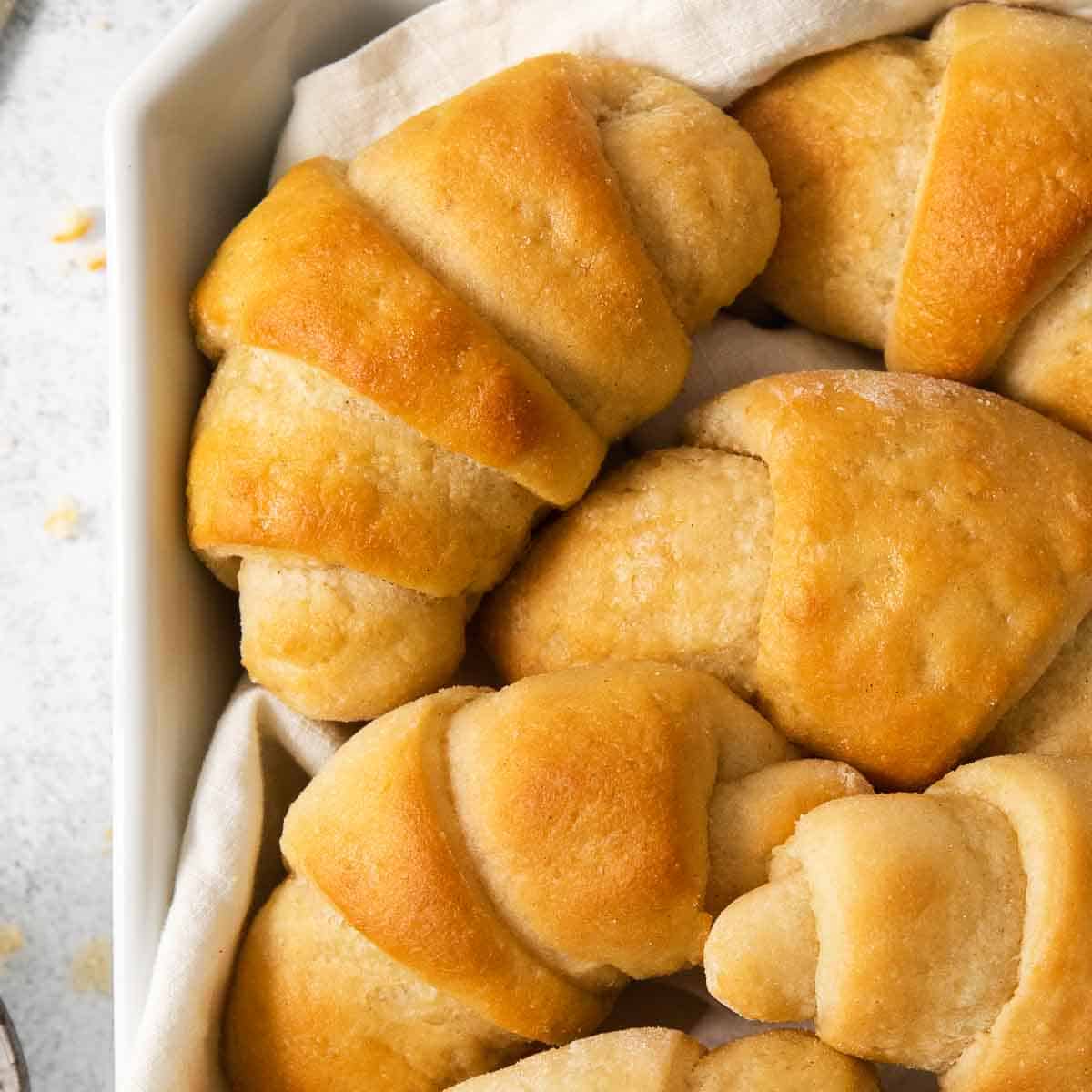
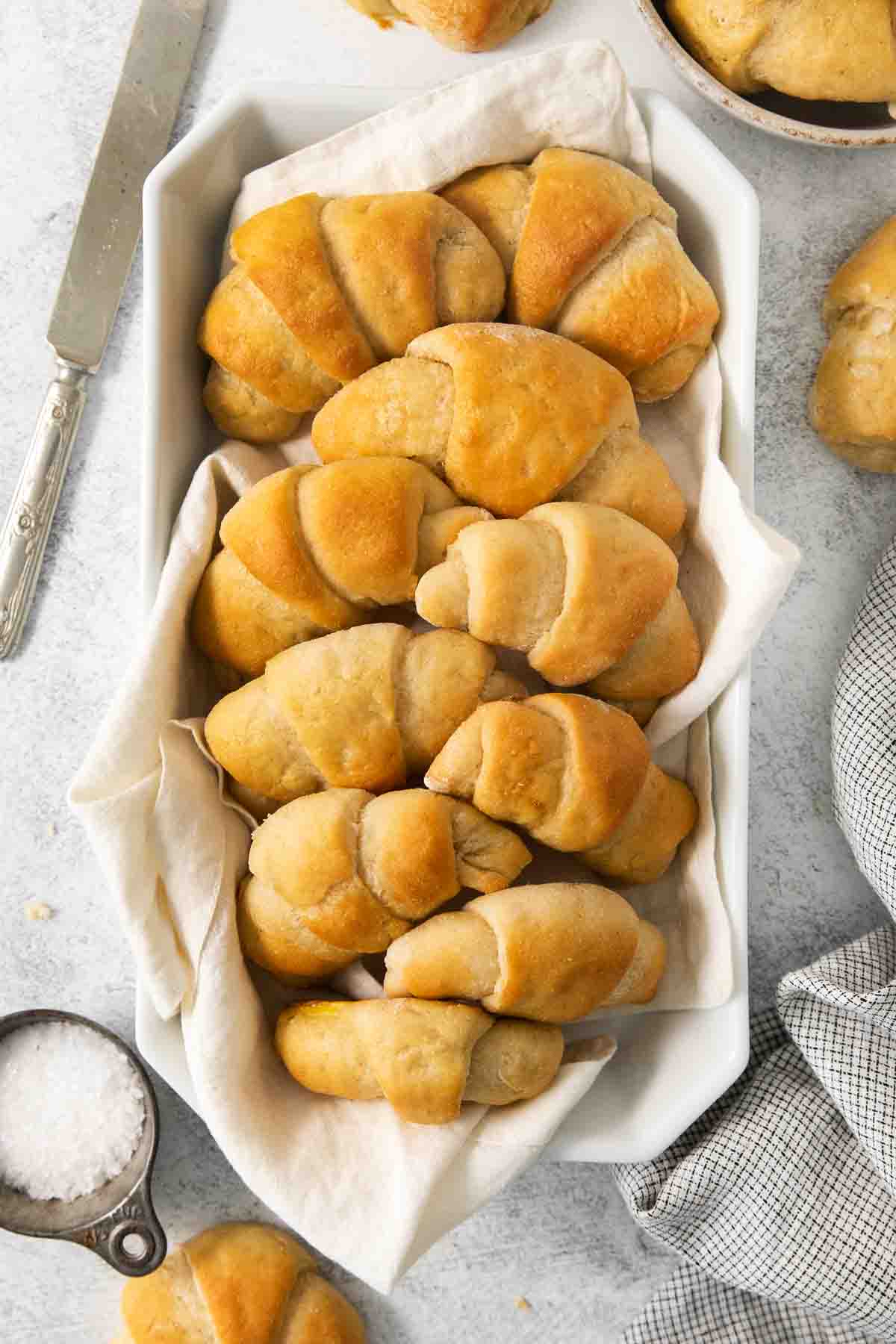
These gluten-free crescent rolls bring back a Thanksgiving tradition from my childhood! After years of trying to recreate my Mom’s crescent rolls, I finally found success with King Arthur gluten-free bread flour.
Outside of the holidays, I typically serve them with gluten-free pot roast or gluten-free beef stew for a comfort meal my whole family loves!
- Only one rise: The shaped rolls rise until doubled before baking, so there’s no second rise to worry about.
- Classic crescent roll shape: The gluten-free dough is workable enough to roll out and shape into the traditional crescent shape.
- Soft and fluffy texture: Gluten-free bread flour helps create the tender texture that’s difficult to achieve with a standard gluten-free 1:1 flour blend.
What You Need
Here are a few notes on some of the key ingredients to make these gluten-free crescent rolls. Jump to the recipe card below for the exact measurements.
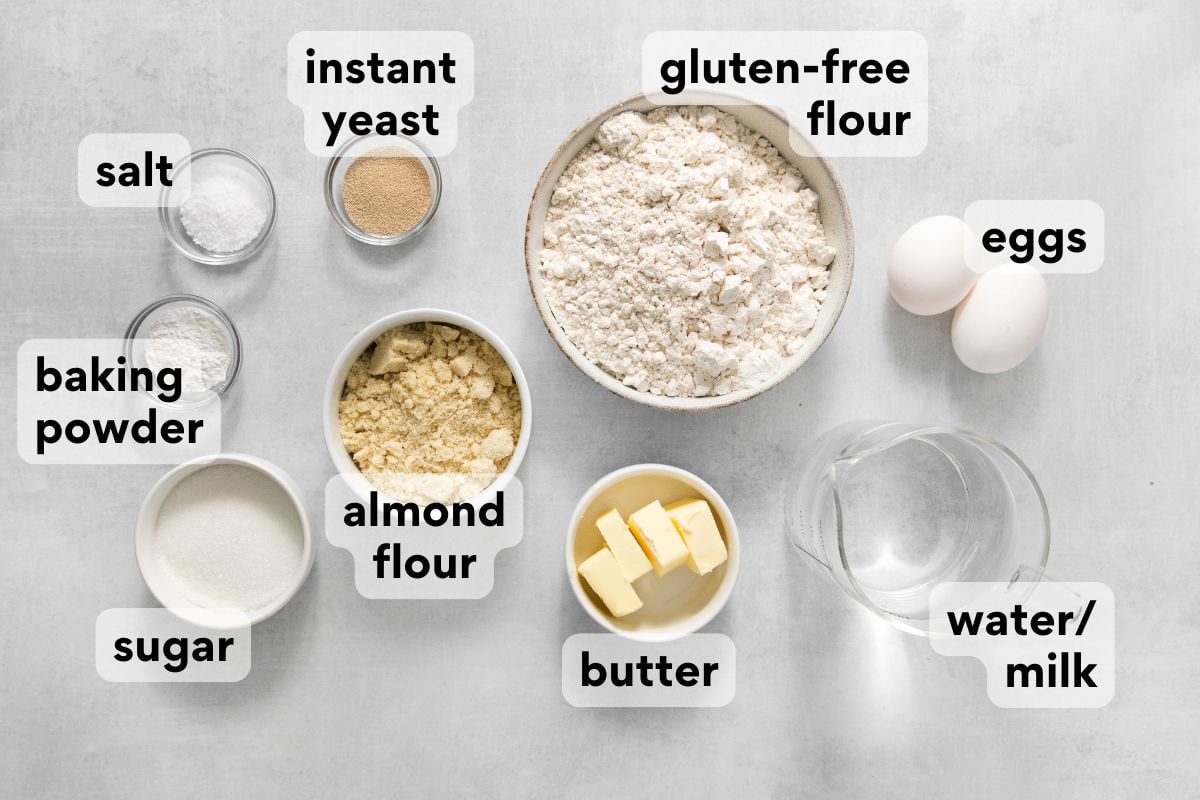
- Gluten-free bread flour. I use this gluten-free bread flour, which contains gluten-free wheat starch and xanthan gum. It creates a dough that’s easy to roll and shape. This is the key to making gluten-free crescent rolls that are as good as the original!
- Almond flour. I like to add a little almond flour for extra flavor and browning. I use the same trick in my gluten-free sandwich bread!
- Instant yeast. I’m a big fan of using instant yeast since it can be mixed directly into the dry ingredients. If using active dry yeast, dissolve it in the warm liquids first.
- Whole milk powder. This is a newer addition to my recipe! I’ve tested it multiple times, and the rolls turn out softer and more flavorful than ever. It’s a small change that makes a noticeable difference!
How to Make Gluten-Free Crescent Rolls
Here’s an overview of how to make this recipe. You can jump to the recipe for the full instructions!
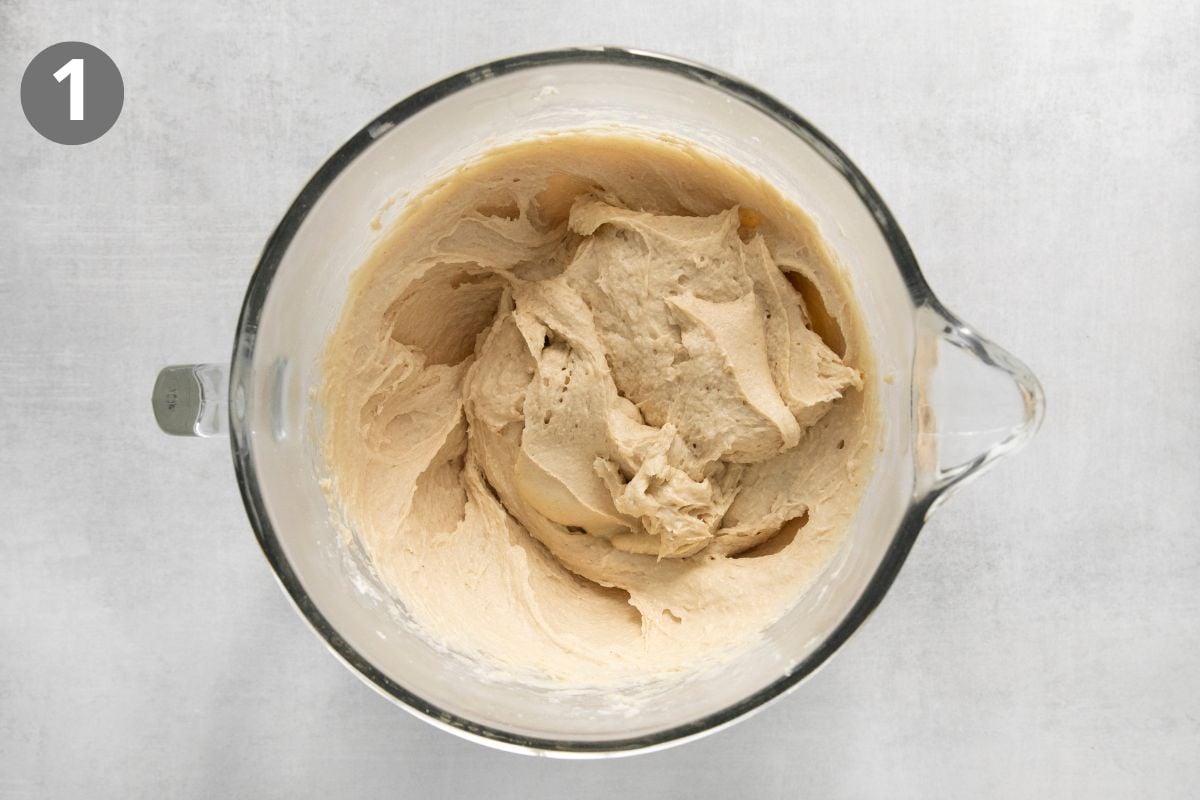
Make the dough. I start by combining the dry ingredients, then slowly add the liquid ingredients with the mixer on low. I increase the speed to medium and mix for 3 minutes, until very smooth. The dough should look like thick cookie dough!
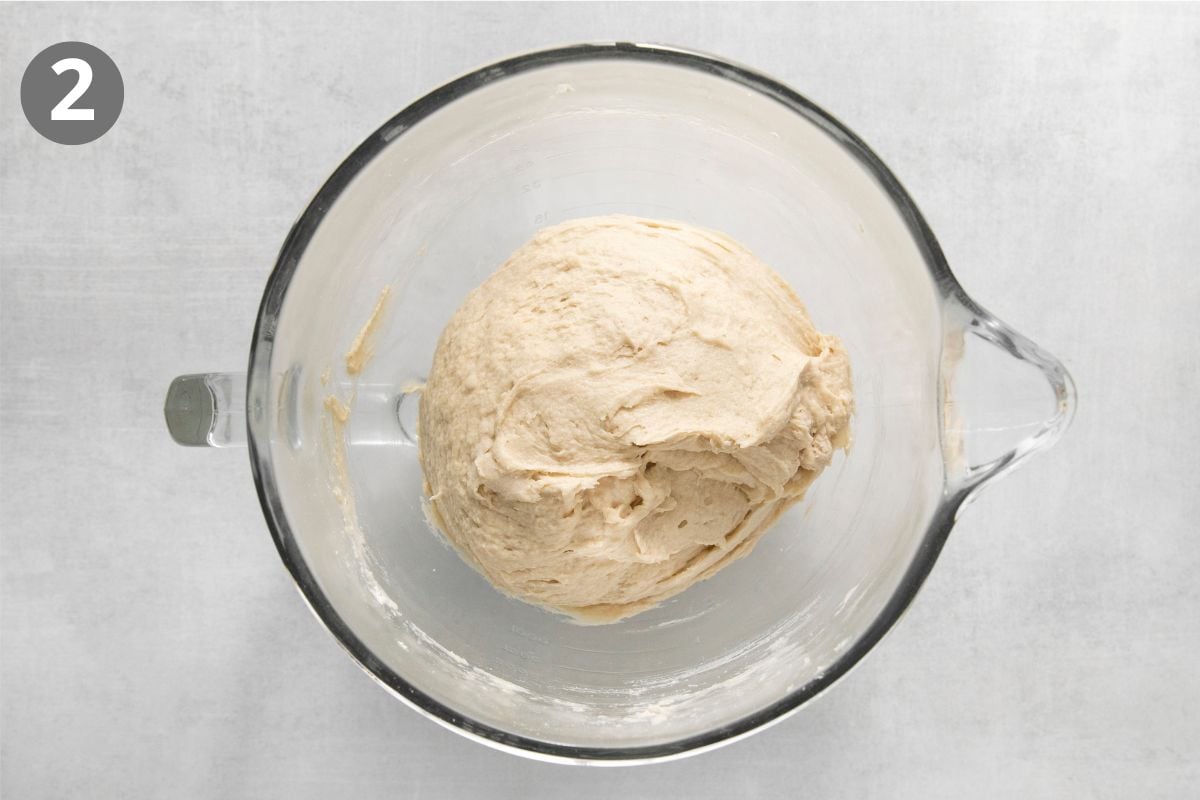
Cover and chill. I oil a spatula then scrape the dough away from the sides and bottom, then cover the bowl tightly with plastic wrap. Refrigerate the dough for 20 minutes. I find this makes the dough much easier to roll out and shape!
Erin’s Tip
I prefer using the paddle attachment on my stand mixer, rather than the dough hook. In my experience, the paddle mixes this thick dough more evenly.
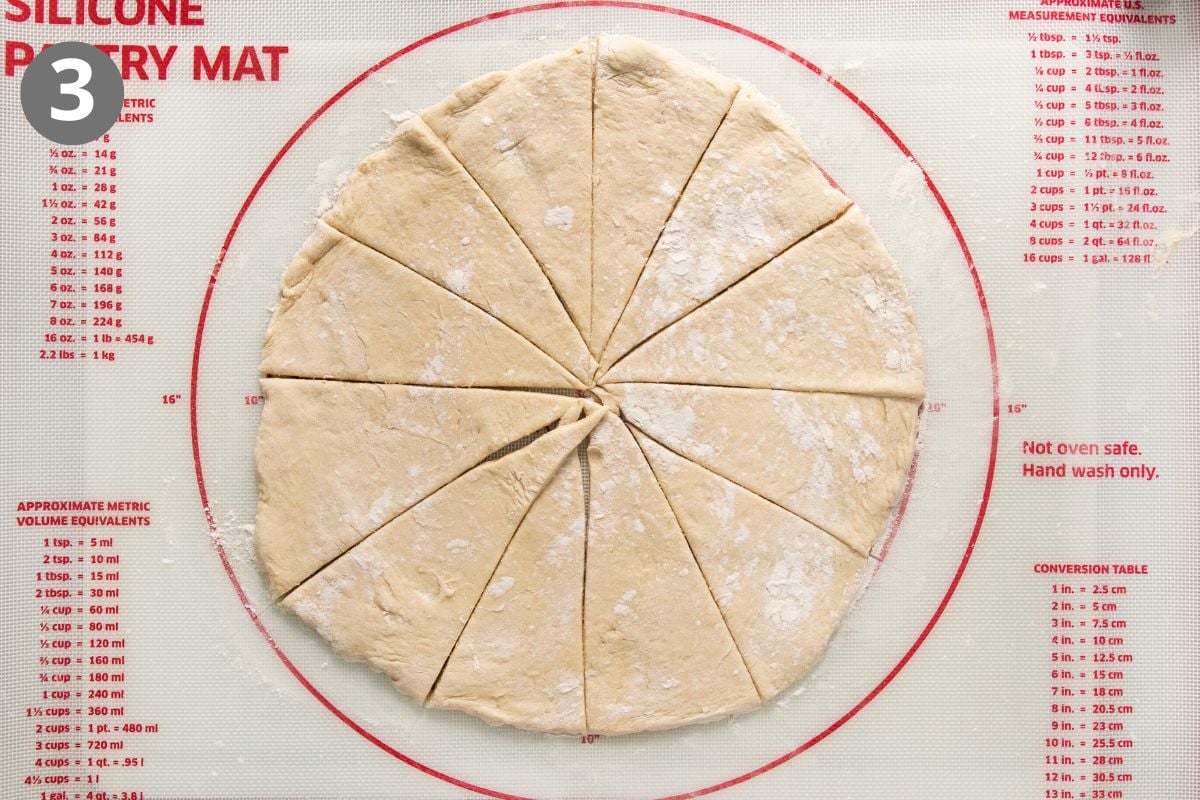
Roll and slice. Lightly flour your work surface, then scoop out half the dough. Roll it into a 12-inch circle and brush with 2 tablespoons of melted butter. Use a pizza cutter to slice the dough into 12 wedges. I aim for equal-sized wedges, but honestly, mine always vary a little and still turn out great! Repeat with the remaining dough.
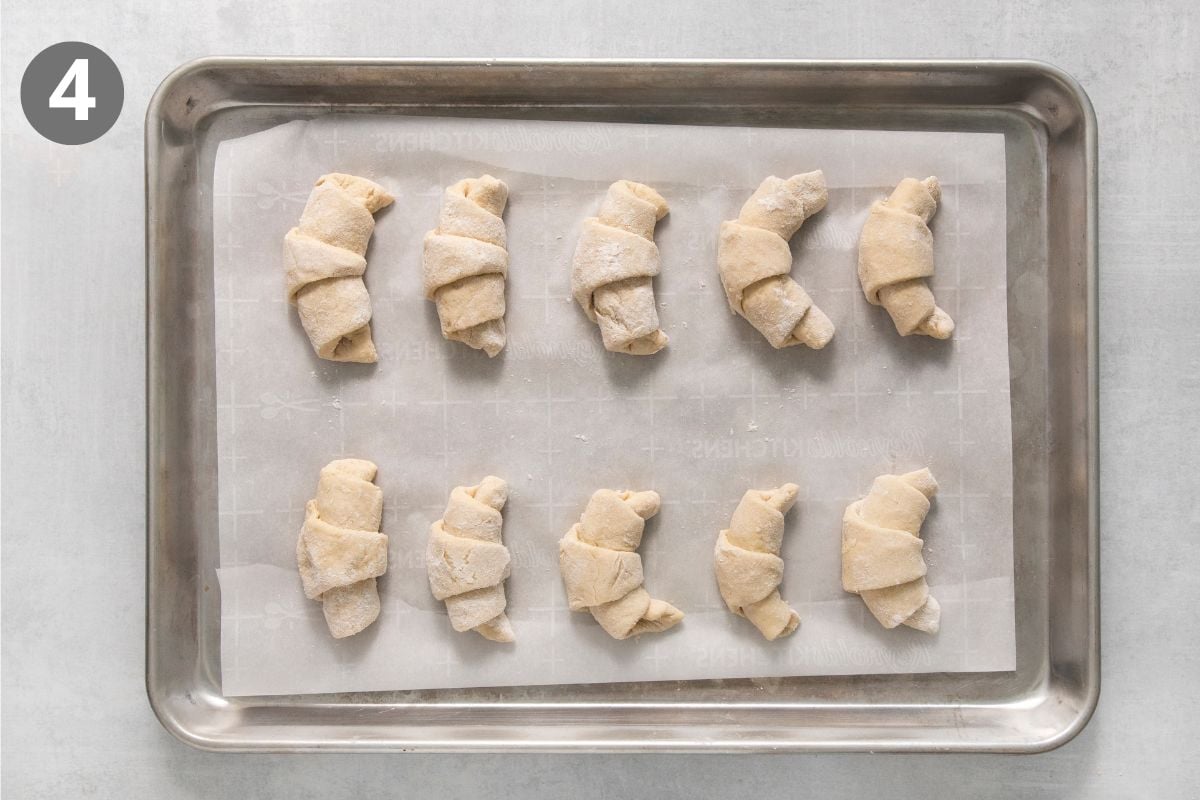
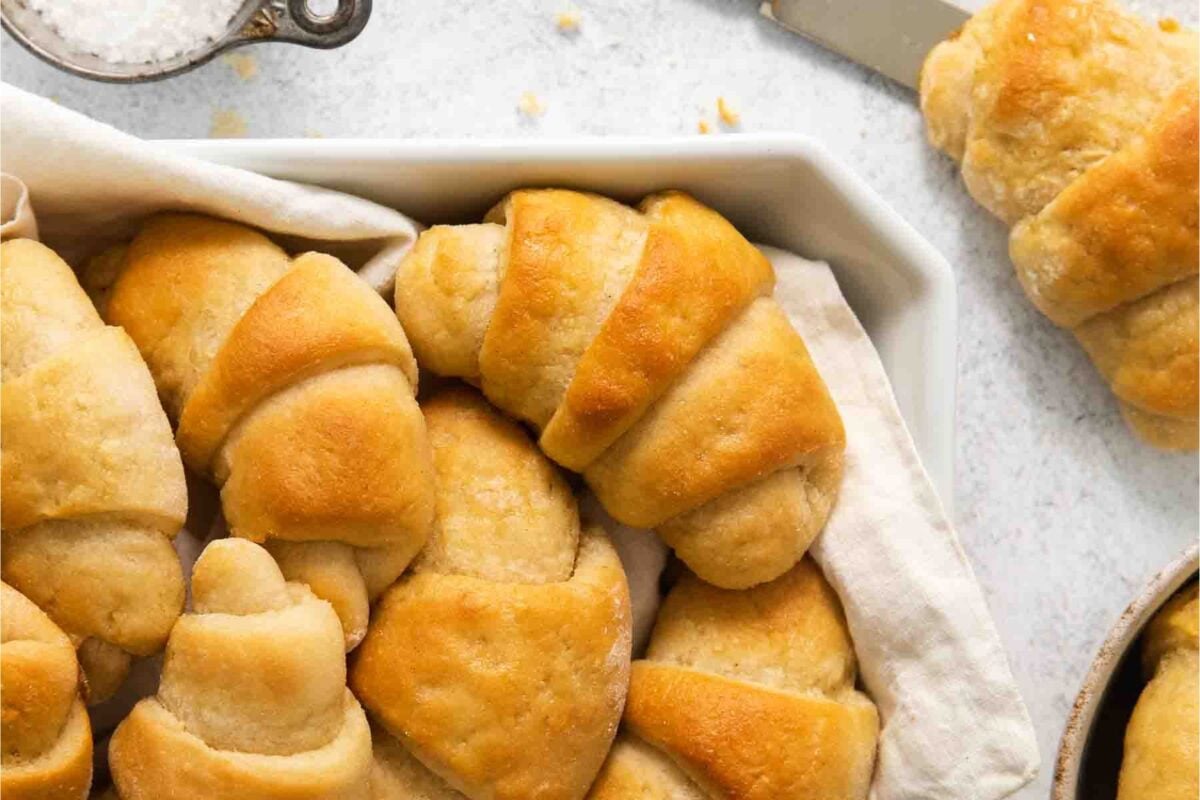
Shape and rise. I start at the wide end to roll up each wedge, then place the rolls point side down on the prepared baking sheets. Make sure you curve the ends to create the classic crescent shape! Cover the baking sheets and let them rise in a warm place until doubled in size. In my kitchen, this usually takes 45 minutes to 1 hour!
Erin’s Tip
I like using this silicone baking mat with circle measurements to make it easier to roll the dough into a 12-inch circles.
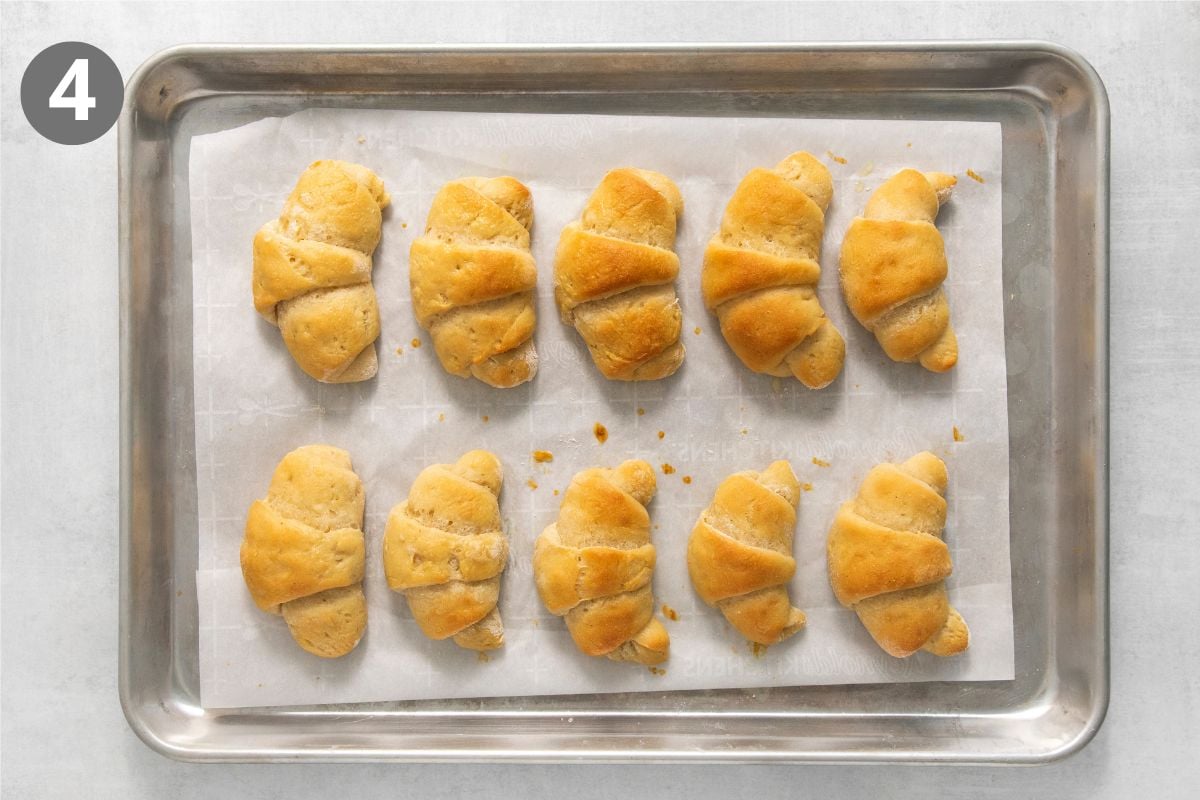
Bake and serve. Bake until the edges start to turn golden, then immediately brush the warm rolls with extra melted butter. I love serving these fresh from the oven while they’re still warm. So good!
More Gluten-Free Bread Flour Recipes
Buttery, Gluten-Free Crescent Rolls
Video
Ingredients
For the Dough:
- 4 cup (600g) King Arthur Gluten-Free Bread Flour
- 2/3 cup (75g) almond flour
- ¼ cup (50g) granulated sugar
- 3 tablespoons (20g) dry whole milk powder
- 2 ¼ teaspoons instant yeast
- 2 teaspoons kosher salt
- 1 teaspoon baking powder
- 1 cup (240ml) water, warm
- 1 cup (250ml) whole milk, warm
- 2 large eggs
- 4 tablespoons (56g) butter, melted
Instructions
- In the bowl of a stand mixer fitted with the paddle attachment, add the gluten-free bread flour, almond flour, granulated sugar, milk powder, instant yeast, salt and baking powder. Mix to combine.
- With the mixer running on low, slowly add the water, milk, eggs and melted butter. Increase the speed to medium and mix for 3 minutes. The dough will resemble thick cookie dough, this is normal.
- Using an oiled rubber spatula, scrape down the bottom and sides of the bowl. Cover the bowl tightly with plastic wrap and refrigerate for20 minutes. (Refrigerating the dough makes it easier to roll out.)
- Line 2 large baking sheets with parchment paper or silicone baking mats.
- On a lightly floured surface, scoop out ½ of the dough. Roll into a 12-inch circle. Repeat with the other ½ of the dough. Brush the top of the dough with melted butter, about 2 tablespoons per circle.(You’ll brush the rest of the melted butter on the rolls when they’re done baking.)
- Use a pizza cutter to slice each circle into 12 equal wedges. (They might vary in size a bit, but that’s fine.) Roll up each wedge, starting at the wide end, into a crescent shape. Place the rolls point side down, 2-inchesapart, on the prepared baking sheets. Curve the ends to form crescents.
- Cover with oiled plastic wrap and let rise in a warm place for 45-60 minutes.
- Preheat the oven to 350°F.
- Bake for 22-26 minutes, until the edges begin to turn golden brown. Remove from the oven and immediately brush the rolls with melted butter. Best served warm.
Notes
almond flour. To Make-Ahead: I like to make these gluten-free crescent rolls ahead of time, then freeze them. This way I know I get the perfect rise and structure! To Store: Leftovers can be stored in an airtight container at room temperature for up to 3 days. I like to refresh them by slicing the rolls in half, spreading a little butter on each half, then broiling the rolls for 2-3 minutes until warm and toasty. To Freeze: Place cooled rolls in a large zip-top freezer bag, press the air out, and seal tightly. The rolls can be frozen for up to 3 months. I recommend thawing them at room temperature for 1-2 hours before warming and serving.










This recipe is incredible, like all your others! I’m allergic to eggs, I used sour cream in place of the eggs and it worked!! Everyone loved them, thank you much.
Hi Karrie, wonderful to hear! Glad the substitute worked out well and everyone could enjoy them!
Hi! I’m planning to make these for Thanksgiving. If I could do most of the prep the day before that would be ideal! Is it possible to prep and store at any step before baking?
Hi Allie, we haven’t made this one ahead of time, but you could try making it one day ahead. We’d recommend covering the bowl tightly with plastic wrap and refrigerating, then the day of, let it sit out at room temperature for about 30-45 minutes to soften before shaping. The rise time after shaping may take longer to get it to double in size since the dough will be colder. We’d love to hear how it goes!
I have been searching for gluten free roll to make for Thanksgiving for my daughter! I tried these yesterday. I ordered all the flour and items recommended. The taste was great but mean were not light and fluffy. My older daughter said they reminded her more of a pretzel. LOL. Any suggestions? I am wondering if I need to mix more or less? Let rise longer? Bake less. Any ideas would be great if you ran into this while testing. 🙂
Hi Britta, we’re sorry you had this experience! If the crescent rolls came out heavy it’s most likely an issue of undermixing, under-rising, not chilling the dough for the full time, and/or over-baking. Another consideration would be if your yeast was old/expired or if the water or whole milk was too hot and impacted the yeast. We’d start with the mixing and rising and go from there. We hope your next batch is amazing!
If we can’t have wheat, what other flour option would work? I really want something for Thanksgiving
Hi Sarah, this recipe was specifically designed for the KA GF bread flour. No other flour blends, such as GF measure-for-measure flours, will work unfortunately.
I’m having the hardest time to get them to the rolled shape. I’ve done everything to a T and it’s still impossible to make shapes. What could I be doing wrong?
Hi Heather, did you use the King Arthur GF Bread Flour? No other flour blend will work the same with these rolls. Otherwise, if you used the bread flour and it was still too sticky, you can try add a little more flour incrementally and then chilling longer to help it soak up the liquid and become workable. We hope this helps!
I followed this recipe exactly using a scale (including the flour) and my dough was super crumbly and dry. What could be happening here?
Hi Makenzie, did you use the recommended gf bread flour? This recipe won’t work with standard gf measure-for-measure/1:1 flours.
Thank you for sharing! I have been searching for a recipe for these, and this one was perfect Perfectly buttery and delicious. My kids couldn’t even tell these were gluten free
Aww, we’re so happy to hear the crescent rolls were a hit with the whole family! Thank you for sharing your positive feedback with us, Aimee!
Because you don’t fold the dough, these don’t have those flaky layers that traditional crescent rolls have BUT… they are so quick, delicious, and versatile I don’t care!! Not only have I used this recipe for crescent rolls, I’ve used it for pigs in a blanket (rolled up and let rise about 30 minutes) and sopapilla cheesecake (baked right after the refrigeration). I usually do 1.5 recipes and keep some in the fridge for a few days to make recipes throughout the week. Thank you so much!
Hi Suzy, thank you for sharing your positive feedback with us! It’s great to know the recipe worked well for pigs in a blanket and cheesecake too. We’re so glad the crescent rolls have become such a go-to recipe!
I have a recipe that calls for two tubes of the Pillsbury refrigerated crescent rolls. The recipe says to take one tube, unroll the dough, and press it into the bottom of a parchment lined 9 x 13 pan, put in the filling and then top with the second tube of unrolled dough.
How many tubes of the crescent rolls is this equivalent to? Do you foresee any issues with using the dough in this manner?
Hi Genelle, this recipe makes 24 rolls whereas Pillsbury crescent rolls usually only contain 8 rolls per tube. One batch of this recipe will be more than enough. We’ve never tried these crescent rolls this way, but a few things to keep in mind if you decide to give it a try: this dough will require rising time (Pillsbury’s doesn’t), it will be a little more fragile than the canned gluten version, and the baking time will need to be adjusted. We hope these ideas help!
Hi! I’ve started tearing through your cookbook recipes, and I love them! My husband has celiac disease and I am so excited to be able to cook the breads that he loves. He stays your GF sandwich bread is the best he has ever had. Anyway, I had a question about the butter use in this recipe. if I’m understanding this correctly, you add 4 Tbs of butter to form the dough itself and brush the dough with additional butter? I just want to make sure I’m getting it exactly right. Thanks!
Hi Kaitlin, good question! You’ll need 4 TBSP for the dough itself then additional butter for before and after baking. We generally recommend 2 TBSP per circle (the full recipe makes two circles) for covering the dough before baking then you’ll need more to top the baked rolls after. We hope you both enjoy the rolls!
Just curious, if I am using this dough as a base in a casserole almost like a pizza crust, do I need to let it rise first or just prepare it and bake it?
Hi Stephanie, thank you for your question! We haven’t tried these crescent rolls as a casserole base, but we would lean towards skipping the rising step, or at least shortening it, so that the rolls don’t puff up too much to be a base. If you decide to give it a try, we’d love to hear how it goes!
I love making this recipe but I am confused about the update on how to add dry milk. It says to add it and leave out the egg whites but the original recipe doesn’t call for egg whites- but eggs. Could you please clarify this for me because I would love to use the dry milk powder!
Hi Morgan, we’re so glad you love the recipe! The note refers to two changes: the addition of the milk powder and the elimination of the egg wash (consisting of 1 egg, water, and salt) that used to go on the rolls right before they went in the oven. The milk powder goes into the dough with the other dry ingredients. We hope this helps and you enjoy the updated recipe!
Hi! I’ve loved all of your recipes and can’t wait to taste this one. I made and chilled the dough; however, I was hoping to roll up Lil’ Smokies in the dough then bake as a little appetizer. I hadn’t properly read the directions first as I see it states to form rolls then let rise before baking. Do you think it would be okay to roll out the dough, roll up the sausages, then wait a little before baking? Thank you!
Hi Atalie, we haven’t given lil’ smokies a try in this recipe before. You could try cutting the dough into smaller wedges (step 3 of “shape the rolls”), rolling the lil’ smokies up in the dough, then letting them rise before baking (step 4 of “shape the rolls”). We’d love to hear how it goes!
Can the dough be made ahead? How much time between making the dough and baking can I allow? If I can prepare ahead of time, would the crescents be already formed into shape?
Hi Hope, we haven’t made this one ahead of time, but you could try making it one day ahead. We’d recommend covering the bowl tightly with plastic wrap and refrigerating, then the day of, let it sit out at room temperature for about 30-45 minutes to soften before shaping. The rise time after shaping may take longer to get it to double in size since the dough will be colder. We’d love to hear how it goes!
I made these as written for Thanksgiving. I prepared the dough the night before, put it in the fridge for the night, then rolled out the dough and finished making the rolls the next morning. They were awesome! I brought a few extra to our Thanksgiving dinner, and several people asked if they could have one since they looked so good. I saved the rest to freeze and enjoy at my leisure later. 🙂
We’re so glad the recipe was a hit, Sarah! Thanks for sharing your positive experience with us. Happy baking!
I was determined to make crescent rolls, but my tired of thanksgiving prep self, was unable to get a perfect crescent roll, so I rolled the dough into dinner rolls and hoped for the best. They ended up being the best dinner rolls and devoured by all (young, old, and eaters of gluten)! Side note, I also used a Blends by Orly, because gluten removed wheat starch kinda scares me, and they still turned out so soft and delicious! So, while I may not have used the recipe as intended, it still was the inspiration for deliciousness!
Yay! We’re so glad the recipe was a hit, Ashlea! It’s good to know that substitution worked for you. Thanks for sharing your experience with us!
Looks like a great recipe and I was wondering if I can use caputo Fioreglut in place of the KA bread flour. I think they’re pretty much the same? Thoughts?
Thanks so much for your recipes!